





EASA

What Are the Minimum Requirements to Make an Aircraft IFR Under EASA?

IFR Banner

Minimum IFR Equipment Requirements Under EASA (Europe)

Flying under Instrument Flight Rules (IFR) in Europe is not just about having a GPS and an instrument rating. Under EASA regulations, an aircraft must meet specific approved equipment requirements before an IFR flight may legally commence.

Regulation-based guide
Includes official EASA references and practical interpretation for owners and maintenance shops.

1) The Legal Basis: Where the IFR Equipment Rules Live

For non-commercial (private) operations in the EU, the core equipment requirements are found in EASA Air Operations (Part-NCO), especially:

  • NCO.IDE.A.105 – Minimum equipment for flight
  • NCO.IDE.A.125 – Instruments and equipment for IFR operations

Official EASA Easy Access Rules (Air OPS, Regulation (EU) No 965/2012):
View EASA Easy Access Rules – Air Operations

Key principle:
You may not commence a flight if required instruments/equipment for the intended flight are missing or inoperative (NCO.IDE.A.105).

2) The Minimum IFR Instrument Set (NCO.IDE.A.125)

Under NCO.IDE.A.125, an aeroplane operated under IFR must be equipped with instruments enabling control of the aircraft solely by reference to instruments. The minimum list includes:

  1. Magnetic heading indicator
  2. Time indication (hours, minutes, seconds)
  3. Barometric altitude indicator
  4. Indicated airspeed
  5. Vertical speed indicator
  6. Turn and slip indicator
  7. Attitude indicator
  8. Stabilised heading indicator

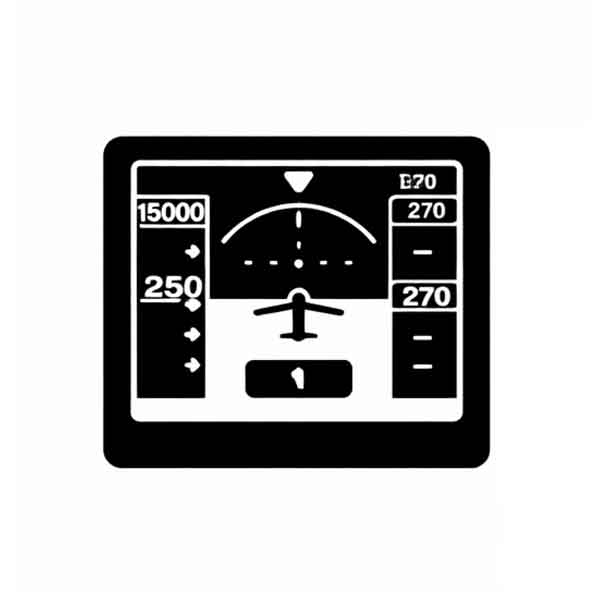
In practice, this corresponds to the classic IFR “six-pack” (or approved glass cockpit equivalents), plus a suitable time source and heading references.

Glass cockpit allowed
If it provides the required functions and is approved and installed per applicable airworthiness requirements.

Portable devices
Portable tablets / non-certified devices may help situational awareness, but generally do not count as required IFR equipment.

3) Navigation Equipment: It Depends on Your Intended IFR Route

Beyond the minimum flight instruments, IFR requires navigation equipment appropriate to the route and procedures. There is no universal “one avionics stack” requirement — it depends on what you plan to fly:

  • Flying an ILS approach → ILS-capable receiver required
  • Flying RNAV procedures → suitable IFR-approved GNSS capability required
  • Operating in controlled airspace with transponder requirements → compliant transponder required

The key is that the aircraft must be equipped for the intended IFR operation, not a theoretical one.

4) Related IFR Operational Requirements

Some IFR requirements are operational (not strictly “installed equipment”), but still essential in practice:

  • IFR flight plan requirements are defined under SERA (Standardised European Rules of the Air).
  • Two-way radio communications and transponder usage may be required depending on the airspace and procedures.

EASA Easy Access Rules – SERA (Standardised European Rules of the Air):
View EASA Easy Access Rules – SERA

Important:
Airspace and approach procedures may impose additional equipment requirements beyond the minimum list.

5) What Is NOT Automatically Required by the Base IFR Rule

The Part-NCO minimum IFR list does not universally mandate items like:

  • Dual COM radios
  • Autopilot
  • DME (unless required by procedure)
  • Engine monitor

These may still be required depending on the aircraft certification basis, the intended procedures, or airspace requirements — but they are not automatically part of the base “minimum IFR instrument set.”

Quick Checklist: Minimum to Commence IFR Under EASA (Part-NCO)

  • Approved attitude indication
  • Approved barometric altitude indication
  • Airspeed indication
  • Turn & slip indication
  • Vertical speed indication
  • Magnetic heading indication
  • Stabilised heading indication
  • Time (hours / minutes / seconds)
  • Navigation equipment appropriate to the intended IFR route/procedures

Need IFR-compliant parts?
We supply certified avionics and instruments with clear EU delivery and documentation options where applicable.

Disclaimer: This article summarizes regulatory requirements and is not a substitute for approved maintenance/engineering advice. Always verify equipment eligibility and installation approval with your CAMO/Part-CAO/Part-145 organization and applicable airworthiness data for your aircraft.

6 thoughts on “What Are the Minimum Requirements to Make an Aircraft IFR Under EASA?

  1. pms_snel says:

    Как коммерческие факторы влияют на [url=https://prodvizhenie-molodyh-sajtov.ru]продвижение молодых сайтов[/url]?

  2. Pingback: bupropion fat loss

Leave a Reply

Your email address will not be published. Required fields are marked *